Announcing the 2025 Research Impact Challenge Winners
Please join us in recognizing the winners of the 2025 Research Impact Challenge Raffle! Congrats to everyone who participated in the challenge activities this year.
Missed the challenge this year? You can continue to take advantage of the 2025 challenges on the Research Impact Challenge Guide. For more information on the use and assessment of research metrics, please visit the Research Impact Guide.
Get to Know the Winners
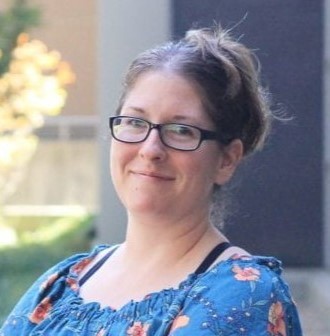
Alison Barrett
Alison Barrett is a postdoctoral scholar at the Institute for Immunity, Transplantation, and Infection. Her research spans multiple complex issues in human health – from teasing out the details of transcriptional regulation in cancer, to taking a deep dive into mechanisms of autoimmunity in multiple sclerosis. Although her expertise is in biochemistry and structural biology, she uses diverse approaches to tackle challenging questions – from good ol’ biochemistry to mouse models, and many things in between. Alison’s core interest is in harnessing these different experiences and skill sets to drive therapeutic development for areas of human health in need of unique strategies – stay tuned!
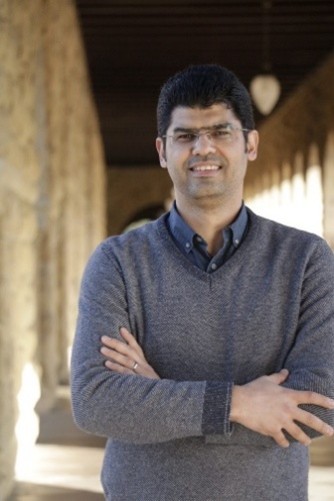
Sajjad Abdollahramezani
Sajjad Abdollahramezani is a postdoctoral scholar in Professor Charles DeBoer’s lab in the Department of Ophthalmology at Stanford University. His research focuses on developing next-generation bioanalytical tools and implantable medical devices that integrate advanced optics, imaging, and AI to make healthcare more sustainable, precise, and accessible. His interdisciplinary work has been recognized through multiple honors, including the SPIE Optics and Photonics Education Award, the IEEE Photonics Society Graduate Student Scholarship, the Sigma Xi Best Ph.D. Thesis Award, and recognition as a Rising Star in Materials Science and Engineering.
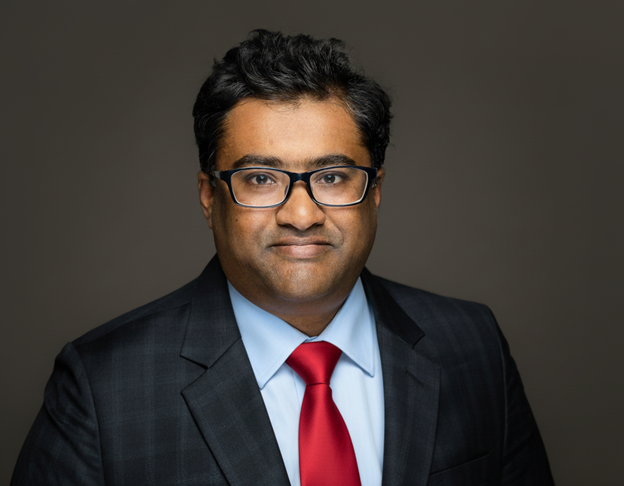
Tazbir Ahmed
Dr. Tazbir Ahmed is currently a Postdoctoral Scholar in the Department of Ophthalmology at Stanford University, working under the mentorship of Prof. Yaping Joyce Liao. His current research focuses on optic neuropathies, with a particular interest in how metabolic stress and aging contribute to disease mechanisms. Tazbir volunteers in the community and enjoys creative pursuits like singing and stand-up comedy.
Takeaways from the Research Impact Challenge
Which challenge did you find the most helpful?
Alison Barrett: I was most engaged in the challenge for creating a Google Scholar profile. I had only used Google Scholar to search for publications before and wasn’t aware of all the features I was missing!
Sajjad Abdollahramezani: I found the Day 5 challenge most helpful because it pushed me to actively share my research with broader audiences rather than keeping it confined to academic circles.
Tazbir Ahmed: Although all the challenges enriched my research experience, I found the Day 3 challenge the most helpful because I was previously unfamiliar with Research Altmetrics and Dimensions. It gave me a new perspective on evaluating my research impact beyond just citation counts.
What is your biggest takeaway from the Research Impact Challenge?
Alison Barrett: This challenge series highlighted for me just how little I know about the tools available to me – makes me wonder what else I don’t know!
Sajjad Abdollahramezani: My biggest takeaway from the challenge is that sharing research widely is not self-promotion but an essential step in translating knowledge into real impact. By making my work more visible, I can foster engagement, collaborations, and ensure that my research reaches the people who can truly benefit from it.
Tazbir Ahmed: My biggest takeaway from the challenge is the importance of staying updated on research visibility and metrics, as journal impact, CiteScore, and other indicators constantly evolve. To avoid bias and make informed publication choices, it’s essential to monitor trends relevant to your research area and actively share your work on social media and research platforms.
Check Out Their Research
Alison Barrett
HDAC activity is dispensable for repression of cell-cycle genes by DREAM and E2F:RB complexes: Challenging a long-standing paradigm, this work reveals that histone deacetylase complexes (HDACs) are not required for gene repression by E2F:RB and DREAM complexes, reframing how transcriptional repression is understood in cell-cycle control and cancer.
See more of Alison’s work on her ORCID profile page.
Sajjad Abdollahramezani
High-throughput antibody screening with high-quality factor nanophotonics and bioprinting: We developed a novel, high-throughput nanophotonic platform to rapidly and efficiently screen massive antibody libraries for the discovery of new biotherapeutics.
See more of Sajjad’s work on his ORCID profile page.
Tazbir Ahmed
Roles of sphingosine kinase and sphingosine-1-phosphate receptor 2 in endotoxin-induced acute retinal inflammation: This study shows that SphK1/S1P/S1PR2 signaling is upregulated in endotoxin-induced uveitis, and inhibiting S1PR2 reduces retinal inflammation, suggesting a potential therapeutic target for retinal inflammatory diseases.
Axonal Energy Crisis and Calcium Phosphate Dysregulation as Pathogenesis of Optic Disc Drusen: This article links hypoxia-driven mitochondrial dysfunction and calcium-phosphate imbalance to ectopic calcification in optic disc drusen.
Oxidative stress-induced cellular senescence in aging retina and age-related macular degeneration: This article highlights oxidative stress, which induces retinal cell senescence and plays a key role in aging and the development of age-related macular degeneration.
See more of Tazbir’s work on his ORCID profile page.
Thank you to everyone who participated in our 2025 Research Impact Challenge! Lane Library can help year-round with your research impact questions. Contact us!